
Part one of our Let’s Get Technical series
Written by Angela Harney, Senior Consultant and Snowflake Data Superhero
Snowflake announced that dbtProjects are now integrated with the Snowflake UI during the Keynote at Summit 2025. Our reaction? It’s very useful. Blending data warehousing platforms and robust data transformation is crucial for delivering timely, accurate, and trustworthy insights. Snowflake offers a potent combination by allowing file-based dbt (data build tool) features as part of the built-in functionality of its user interface to streamline and accelerate data workflows.
What’s dbt? dbt is an open-source tool that enables development teams to transform data in their data warehouses using SQL by incorporating data modelling, version control, testing, documentation, and now, with Snowflake, also providing execution in the same platform. Why is it a big deal? Well, it can lead to faster development cycles, improved data quality, along with enhanced collaboration to deliver valuable insights quickly and efficiently. Let’s take a deeper look at the technology.
User Interface
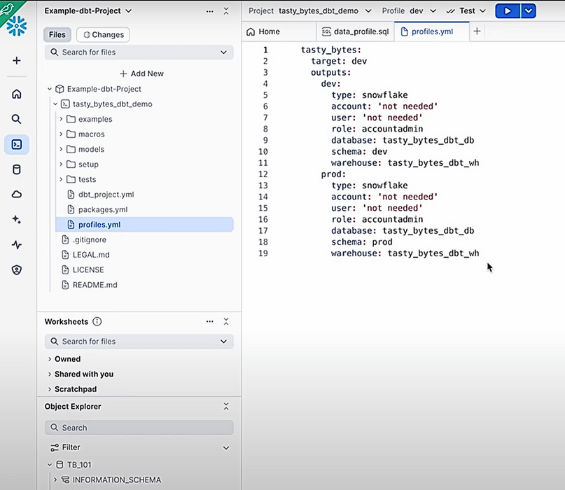
You can create, edit, schedule, and run dbt projects from your existing git repo projects by doing pull and push commits from the new file-based Workspaces UI right in Snowflake.


File Sharing
In an upcoming release of Workspaces, developers will also be able to share files amongst team members across individual workspaces, thereby alleviating the tricky management of the model files in current dbt project implementations.
Authentication
You don’t need a service account or private link, so you don’t have to worry about authentication and federation. There are no additional containers utilized since dbt runs on the same warehouse where the SQL statements execute.
Observability

You can not only deploy and schedule your dbt runs in the Snowflake UI as tasks, but there is an observability panel that allows you to drill through nested layers of execution all the way down to the logs, even if you are running stored procedures.


There is also a dag view that allows you to drill down to the .sql file

Cost Management
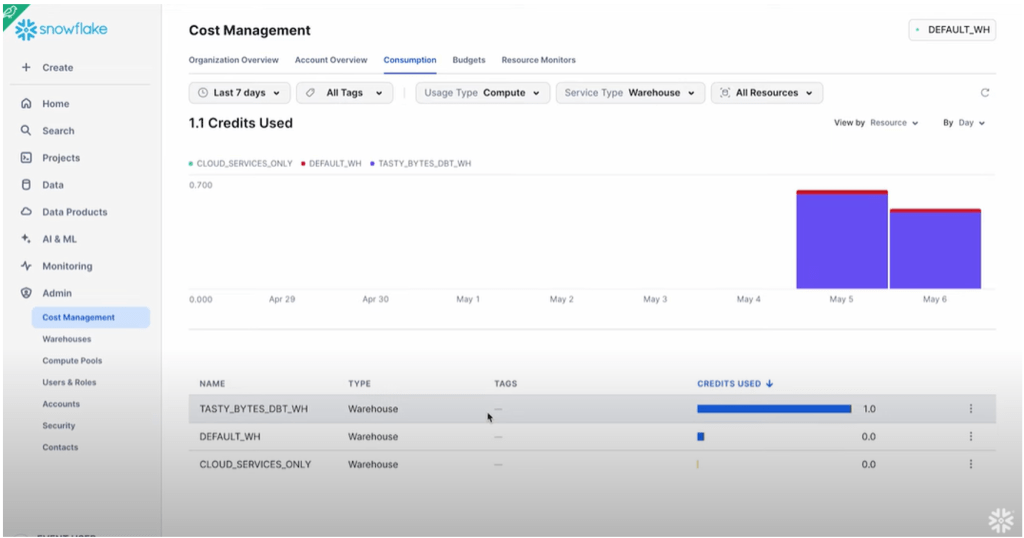
The only additional cost, in addition to standard compute for the SQL commands, is for the orchestration for the scheduling, which is minimal and comparable to the costs spent on licensing another tool to handle this for you.
Built-in Jinja Support
When you open your .yml files, Snowflake has support for Jinja. You can run individual tests right from the same UI where you create the SQL files.

Scheduling
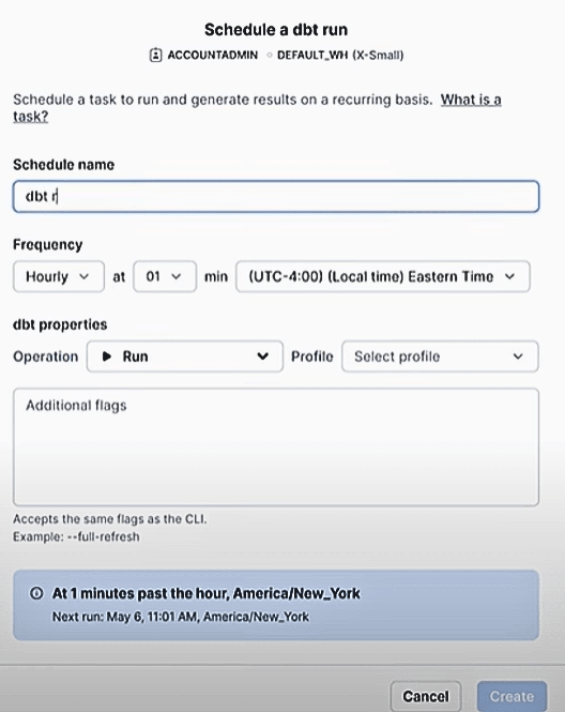
The roadmap will release additional features, such as pre-deployment checks to ensure dependencies in the environment are met, as well as improved scheduling.
Automatic dbt Upgrades
Snowflake will handle dbt upgrades, allowing you to select what version you want to work with so you can manage deprecations
Conclusion
Snowflake is dedicated to supporting developers across its platform of features so be sure to check ongoing release details for additional functionality enhancements around dbt Projects in the coming months.
Unify is a Premier Tier Services Partner for Snowflake. We implement and use Snowflake’s workloads, from Data Warehousing to Data Engineering to Data Science to Data Sharing, to provide insights and business value.
Unify’s deep experience with Snowflake across industries and use cases enables you to draw on leading practices for effective cloud initiatives that are executed efficiently. Learn more about our Snowflake solutions.
* References: Screenshots were taken from the recommended YouTube article “Running dbt Projects On Snowflake” from Snowflake Developers by Snowflake.


